SPECIES DESCRIPTION
CHLAMYDOPHORA TRIDENTATA
Family and Genus:- See- COMPOSITAE
Common Name:- None
Homotypic Synonyms:- Balsamita tridentata, Cotula tridentat, Matricaria
tridentata, Plagius uliginosus, Tanacetum uliginosum.
Meaning:- Chlamydophora(Gr)
Tridentata (L) With 3 teeth.
General description:- Glabrous annual.
Stem:-
1) Usually 60-100 cm tall, sparsely arachnoid-tomentose, branched above, with
spiny wings.
Leaves:-
1) Somewhat fleshy, Linear-oblanceolate, entire or toothed, often 3-dentate near the
apex.
Flowers:-
1) Capitula, long-pedunculate, discoid, c.10 mm in diam.
2) Florets, yellow, all hermaphrodite.
3) Receptacle, without scales.
4) Involucre, hemispherical.
5) Bracts, c. 2 mm, oblong, rounded at apex, broadly scarious.
Fruit:-
1) Achenes, 1-1.5 mm, fusiform, ribbed, shortly pedicellate, dark brown with whitish
ribs and an oblique corona about as long as the achene.
Key features:-
1) Receptacle, without scales.
Habitat:- Salt-marshes and Other habitats in the eptlittoral zone, occasionally
along roads some distance inland. up to 200m
Distribution:- In Greece confined to the Aegean area. - Cyprus, Palestine and N
Africa; an example of the N African element in the flora of the SE Aegean area.
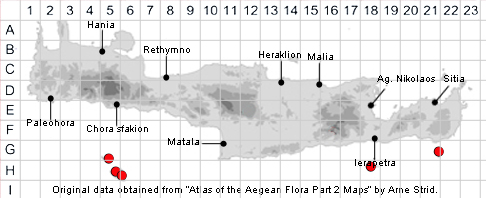
Rare on Crete currently known only from the islands of Koufonisi, Chrisi and Gavdos
Flowering time:- Feb-May.
Photos by:- An Other